
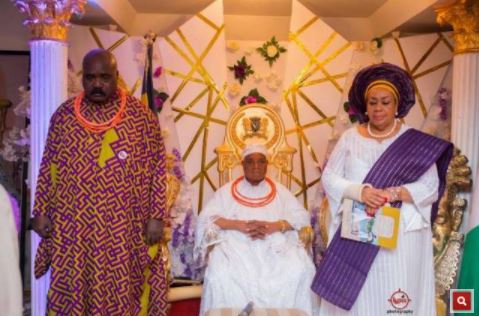
There are some families around Nigeria whose wealth is remarkable and famed. These are some of those families.
Growing up in a family that is anything other than insanely wealthy
in Nigeria means there are certain lifestyles you will never have a
taste of, except fortune and generational wealth decide to smile on you.
Nigerians know the distinct sound and mannerisms of wealth. We also
recognise familial wealth, the kind of financial power and the
attendant respect that certain families command.
A fair number of these families are built around patriarchs who
made their wealth in the early years of Nigeria’s history. Today, these
families control wealth, the economy and power in certain areas in ways
that only money can in Nigeria where power is the ultimate currency.
Whatever attempts to create an exhaustive list or ranking of
Nigeria’s wealthiest families would be frustrated by the clear absence
of public records or any form of honesty from the members as to how much
they are worth.
Still, the lists exist and this one compiled by MANUCHE, a youtube
channel, seems a bit close to the mark in bringing up some of the most
familiar names and a few that have flown beneath the radar for quite a
while.
Here are 10 of the richest families in Nigeria
1. The Igbinedion Family:
The Igbinedion Family's patraich is Chief Michael Igbinedion, the Esama of Benin (Kemi Filani)
Hidden in the town of Okada, the Igbinedion Family is one of the
most powerful families in Edo State and Nigeria’s culturally-diverse
South-South.
The family’s patriarch is the Esama of Benin, a chief of the Bini
Kingdom who was conferred by Oba Akenzua II. He is said to have started
off as a police officer before becoming involved in the car business,
first as an employee and later as head of his own auto care outfit.
It was from here that he spread his span, starting off a ring of
businesses, including the now-defunct Okada Air, Igbinedion University,
Kada Plaza and Igbinedion Television.
His son, Lucky Igbinedion was Governor of Edo State, from 1999 to
2003. His daughter, Omosede Igbinedion currently serves in the Federal
House of Representatives, as the lawmaker representing Ovia North
Federal Constituency.
2. The Folawiyo Family:
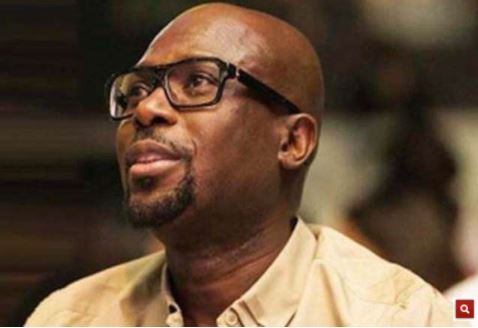
Tunde Folawiyo (Society Now)
The Folawiyos were set on their path by Chief Wahab Folawiyo. After
studying at the University of North London and returning in 1951, he
founded Yinka Folawiyo and Sons, an import and export business.
The company would later be transformed into the Yinka Folawiyo
Group (with Yinka Folawiyo & Sons remaining as the de jure parent
company, which divested into energy, agriculture, shipping and real
estate. Chief Folawiyo was a cheerful philanthropist during his life.
He invested time and money in the Muslim community, endowed the
professorial chair at the University of Lagos and upgraded the
University of Lagos’ health centre to a full-fledged hospital.
After his death, his son Tunde Folawiyo has taken charge of the company.
3. The Saraki Family:
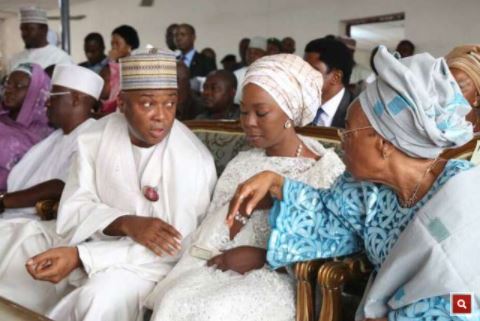
Saraki family
The Sarakis may be renowned for political power but they are also one of the richest families in the country.
Bukola Saraki is the most prominent member of the family as things
stand but his rise to power began as an understudy of his father,
Olusola Saraki.
Before his death in 2012, the older Saraki served as a senator in
Nigeria’s Second Republic and as chairman of the now-defunct Societe
Generale Bank.
Bukola Saraki served as Governor of Kwara for two terms before joining the Senate.
His sister, Gbemisola is also a senator. Perhaps due to its
presence in politics and public service, the family has managed to keep
most of its financial dealings private.
The recently-released Paradise Papers however suggest the presence of real estate assets outside the country.
4. The Tinubu Family
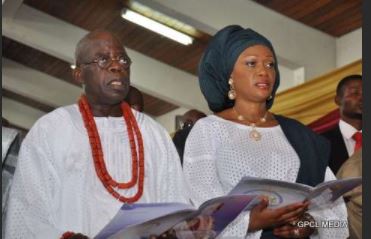
The Tinubus
The Tinubu name is one that commands heavy respect in most circles in Lagos.
However, the pending uncertainties about the parenthood of its most
popular member, former Lagos State Governor, Bola Ahmed Tinubu pose a
challenge in ascertaining the true extent of the family’s ties.
His mother, Chief Abibatu Mogaji was a wealthy Lagos trader and
businesswomen as well as one of the most influential community leaders.
Prior to her death in 2013, she was the President-General of the
Association of Nigerian Market Men and Women.
If you will believe the hearsay, her son is one of the wealthiest
men in the country, with enough in investments to create a dynasty of
its own.
The Lion of Bourdillion spent most of his professional life as an
Executive at Mobil, before starting his political career in 1992. Tinubu
is believed to be invested in most of Lagos’ prime real estate, and has
been charged or invited with storing wealth in numerous foreign
accounts.
5. The Adeleke Family:
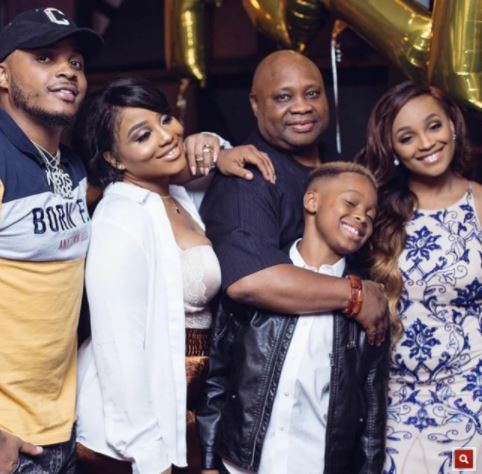
The Adelekes
You may have been excused of not knowing the Adeleke family before
2012, Davido, B-Red, Sina Rambo and the dancing senator have changed
that.
The Adeleke Family is built around the band of brothers; Adedeji Adeleke, Ademola and Isiaka Adeleke.
The former, Adedeji Adeleke, is the founder and Chief Executive of
Pacific Holdings Limited which has investments in real estate, banking,
transport and oil. He is also the founder of Adeleke University, a
privately-owned tertiary institution in Ede, Ondo State.
Ademola Adeleke is mostly known for his emotive, playful dancing.
The former scholar is the Senator representing Osun-West Senatorial
District.
It is a role he came to hold after the demise of his brother, the
late Isiaka Adeleke who was a stalwart of the PDP in his home state.
The family’s younger generation is more involved in music and
entertainment. David Adeleke is one of the biggest afro-pop stars of his
generation. Bayo and Sina, his cousins, have also enjoyed moderate
success as musicians.
6. The Abiola Family:
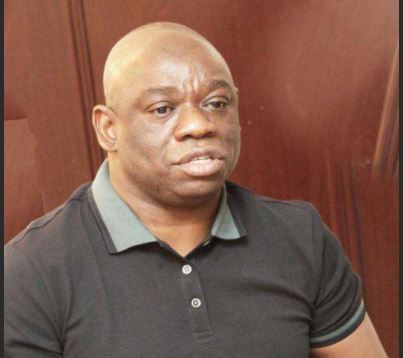
Decades after the death of its patriarch, the well-loved M.K.O
Abiola in the late 1990s, the larger Abiola family is still one of the
wealthiest in the country, a feat considering how big the family is and
the fact that most of its wealth is a function of the personal wealth
Abiola amassed in his lifetime.
Before deciding to run for office in 1993, Abiola was seen as the
wealthiest man in Nigeria. His effusive philanthropy was matched by the
extent of his business investments, stretching from banking, finance and
education to transport, publishing and oil.
Since his death, his children have continued to expand and enjoy
their father’s wealth. The most prominent of them, Kola Abiola managed
what’s left of his father’s companies, choosing to maintain a low
profile.
7. The Danjuma Family
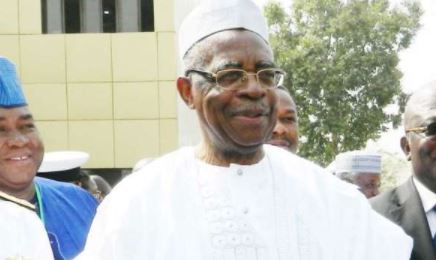
The Danjuma family owes its wealth to Theophilus Danjuma, who is one of the most influential persons in Nigerian history.
After participating in some of the more notable coups, he was Chief
of Staff of the Nigerian Army from July 1975 to October 1979.
Legend has it that part of his bounty was the right to one of
Nigeria’s fabled oil blocks. Danjuma is the chairman of South Atlantic
Petroleum.
His brother, the lesser known Musa Danjuma, has his hands in trade
and shipping as the Executive Chairman of Nigeria America Line Limited
and Comet Shipping Agencies.
The most prominent member of the second generation is Yuki Danjuma,
a son of T.Y. Danjuma who manages the family’s real estate portfolio as
the co-founder of Attollo Realties Limited.
The Danjumas are one of the North’s wealthiest families.
8. The Briggs Family
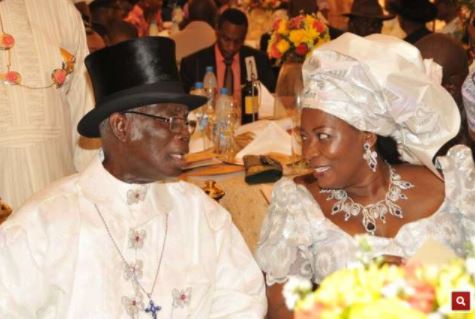
Straight from the heart of the oil-rich Niger Delta, the Briggs
Family is one of the wealthiest in the region and the country at large.
The family’s patriarch, Chief O.B Lulu-Briggs is one of the
wealthiest Nigerians alive. Most of this is traced to his ownership of
the private oil and gas exploration and production company, Moni Pulo
Limited.
According to Forbes, “Moni Pulo was awarded its first oil block in
1992 when the Nigerian president at the time, Ibrahim Babangida, was
encouraging indigenous participation in the upstream sector of the oil
and gas industry.
The company currently has oil blocks in Ondo state, Abia and
Akwa-Ibom state. Its flagship project, OML 114, produces 10,000 barrels
per day.
Along with his wife, a pastor, he funds the O.B Lulu Briggs
Foundation, which provides humanitarian services to rural communities.”
9. The Dantata-Dangote Family
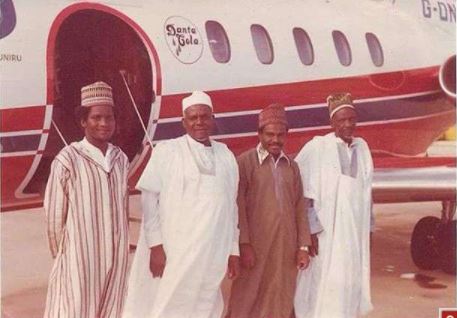
Chairman
of Dangote Group Alhaji Aliko Dangote (first left), Dangote's
grandfather who gave him seed capital to start to his business, Late
Alhaji Sanusi Dantata (Second left), Alhaji Hassan Dantata (second
right) and late Qadiriyyah scholar Sheikh Alin Kumasi (first right) in
the early 80's. (Trezzy Helm)
You already know Aliko Dangote, the richest black man alive and
savvy businessman. The relationships that spurred his success in
business and the families that have been built around them are not known
to many.
The story begins with Chief Al-Hassan Dantata who lived through the
height of colonial rule, from 1877 to 1955. Dantata was a Northern
Nigerian trader in kola nuts and ground nuts and distributor of European
goods.
He was one of the major suppliers of raw materials to large British
trading companies with business interests in other West African
countries. Dantata's company supplied large British trading companies
with raw materials and also had business interests in the Gold Coast. At
the time of his death, he was one of the wealthiest men in West Africa.
The family has produced many of the most shrewd businessmen in
Nigeria’s recent history including Mamuda Dantata who spread the
family’s interests across West Africa and Mudi Dantata who passed in
2005. The most notable, Aliko Dangote, is the elder Dantata’s
great-grandson.
10. The Ibru Family
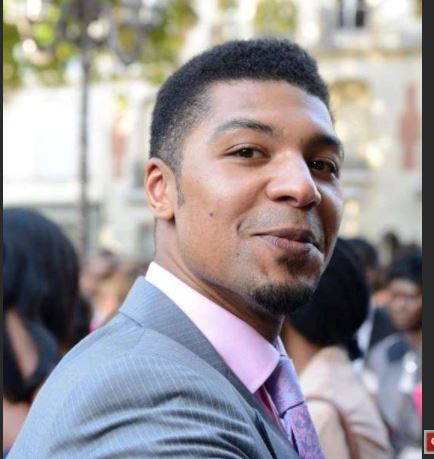
… or should I say, the Ibru Organisation.
The Ibru Family are from the town of Agbarha-Otor, near Ughelli in
Delta State. The family’s original patriarch was Chief Peter Epere Ibru.
Their son, Michael Ibru founded the Ibru Organisation, an umbrella firm to manage the family’s future businesses and assets.
The same year, he partnered with Jimmy Large, an Englishman, to
form the Laibru general trading company, and also bought a share of Ace
Jimonma, a construction firm.
Ibru was a pioneer in distributing frozen fish in Nigeria; a trade
which is worth billions in naira every year. Through acquisitions and
joint ventures, he grew the original organisation to have interests in
brewing, construction, petroleum, agriculture and industry.
The family’s wealth has been built on a host of joint deals,
meaning even as most of the brothers are late, the new generation has
picked up the charge with ease.
The family owned the now-defunct Oceanic Bank and Aero Contractors.
The Ibrus own Guardian Newspapers, Federal Palace Hotel and Michael
and Cecilia Ibru University in Delta State, with massive real estate
investments the world over.
0 comments:
Post a Comment